What Is the Japanese Honeybee? Differences from the Western Honeybee and the Charm of Daisen Honey

"What kind of bee is the Japanese honeybee?"—many people find themselves wondering this when choosing honey. The Japanese honeybee is a native species of bee that has long lived in harmony with nature in the mountains and fields of Japan. In this article, we carefully introduce its ecology, how it differs from the Western honeybee, and the features of beekeeping. We will also touch on the story of honey born from the blessings of Mt. Daisen in Tottori, Japan.
What Is the Japanese Honeybee — A Native Species Thriving in Japan's Mountains and Fields

The Japanese honeybee (Nihon mitsubachi) is considered a native bee that has inhabited the Japanese archipelago since ancient times. While the "Western honeybee" that we often see in flower beds and orchards is a non-native species introduced from the Meiji era onward, the Japanese honeybee is a being that has adapted over a long span of time to Japan's four seasons and climate.
Its body is somewhat smaller, and its coloring is darkish, giving a calm impression. It has lived a life of building nests in the hollows of mountain trees and gaps in rocks, gathering nectar from a diverse array of wild flowers. Rather than large-scale cultivation by human hands, its quiet way of living in an environment close to nature could be said to be characteristic of the Japanese honeybee.
Differences from the Western Honeybee — Temperament, Nectar, and Yield

There are said to be several differences between the Japanese honeybee and the Western honeybee. First, in terms of temperament, the Japanese honeybee is relatively gentle, yet sensitive to enemies and environmental changes, and is said to have the habit of relocating its entire nest if the environment does not suit it. Because of this delicacy, keeping them requires a deep understanding of the natural environment.
Next is the amount of nectar that can be harvested. Whereas the Western honeybee tends to gather a good quantity of nectar from specific flowers, the Japanese honeybee slowly collects nectar from a wide variety of wild flowers. As a result, the amount that can be harvested from a single nest is small, and the yield tends to be limited. This nectar, also called "hyakka-mitsu" (hundred-flower honey), is prized for the complex and deep flavor woven from the flowers of each season. Its scarcity, born of small quantities, is also a distinctive trait of Japanese honeybee honey.
The Story of Honey Nurtured by the Sacred Mt. Daisen

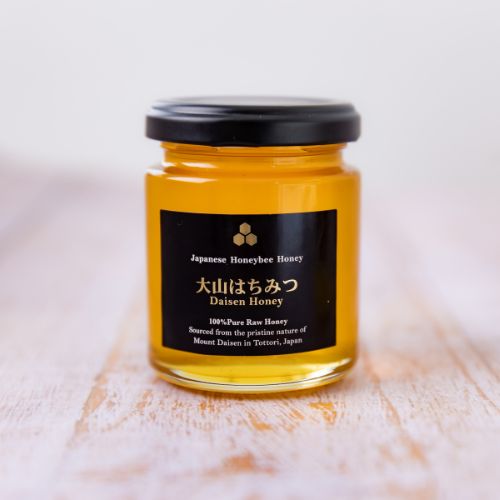
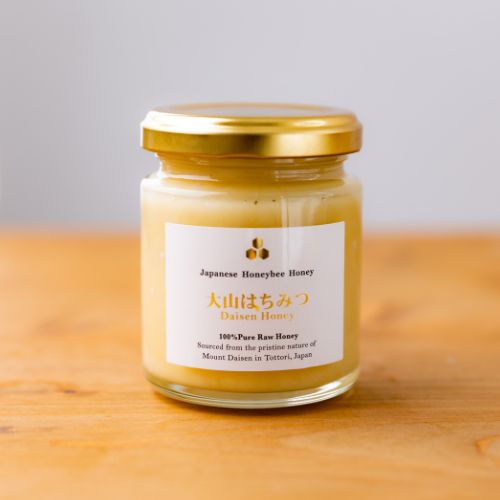
Our Daisen honey is born from nectar gathered by Japanese honeybees at the foot of Mt. Daisen in Tottori, Japan. Known as the highest peak in the Chugoku region, Mt. Daisen has long been revered as a "sacred mountain," a mountain rich with primeval beech forests and pure water.
In the land cradled by this mountain, various flowers bloom with each season, and the bees visit them one by one as they gather nectar. We feel that the clear air of Mt. Daisen and its diverse vegetation lend a quiet depth to the flavor of the honey. It is not humans who take center stage; rather, each drop is born only through the workings of the mountain and the labor of the bees—we cherish such respect for nature. For more about the natural features of the region, please also see our article introducing the nature and beekeeping of Mt. Daisen.
The Choice of Unheated and Additive-Free, and Sustainable Beekeeping

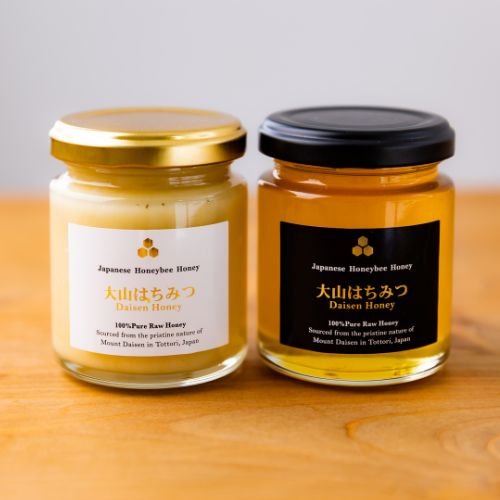
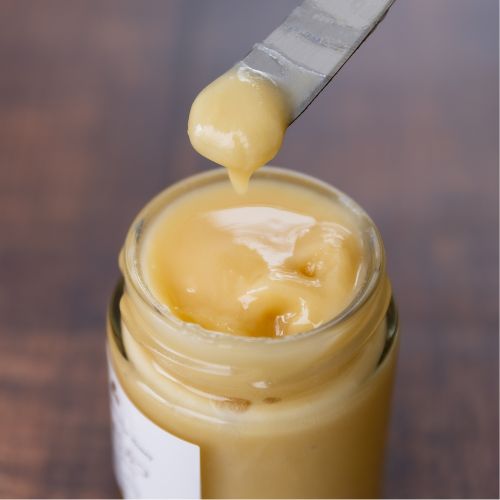
Daisen honey is bottled unheated and additive-free. By keeping heating to a minimum, we take care not to lose the honey's natural aroma and delicate flavor. Our creed is to deliver the blessing exactly as the bees gathered it, without adding any mixtures.
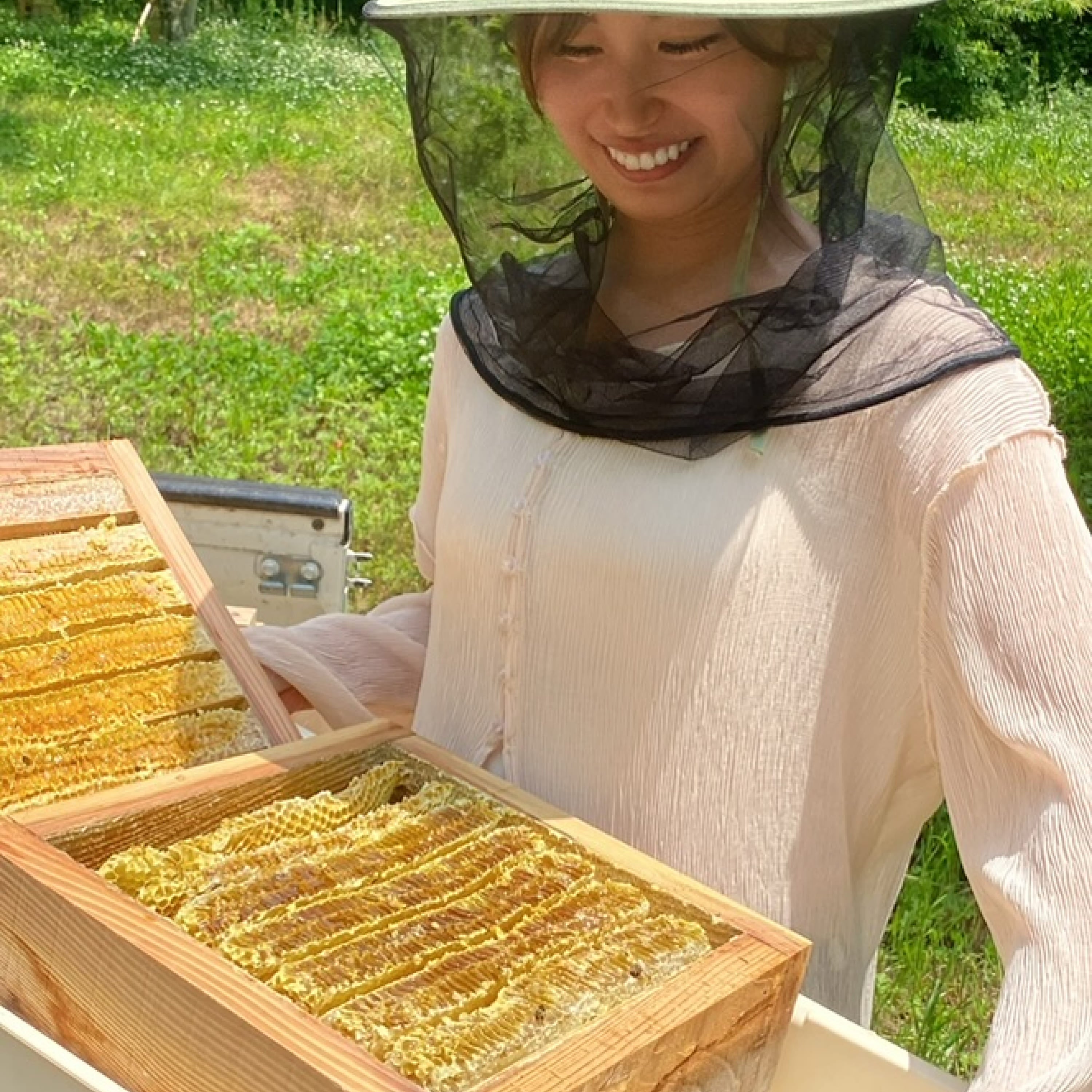
Furthermore, the harvest takes place only once a year, with just 200 bottles produced. This quantity arises from the delicate workings of the Japanese honeybee and from the idea of leaving behind the nectar the bees need to survive the winter. Not taking too much from the bees, and protecting the environment of the nest—these are the basics of sustainable beekeeping, as well as the wisdom needed to maintain a long relationship with nature. We do not wish to "make the bees work," but rather to be a presence that stays close to their workings. We have also prepared an article about our unheated production method for honey.
Points to Keep in Mind When Enjoying Honey
Honey is a food that has been enjoyed at Japanese tables since ancient times. It has been enjoyed as a flavor that accompanies daily life, whether spread on bread or yogurt or dissolved into drinks.
On the other hand, there is an important point to keep in mind. Please do not give honey to infants under one year of age. This is because it may cause infant botulism, and Japan's Ministry of Health, Labour and Welfare also advises that "honey should be given only after the age of one" (source: Ministry of Health, Labour and Welfare). For children over one year of age and for adults, it is generally considered no problem to eat. Please keep this in mind so that you can enjoy honey with peace of mind.
Conclusion — A Drop from Mt. Daisen for Your Daily Table
The Japanese honeybee is a native species that has walked alongside Japan's nature, and the nectar it gathers, though small in quantity, holds a deep and profound flavor. At the foot of Mt. Daisen in Tottori, Daisen honey—which we keep unheated and additive-free, sharing only 200 bottles once a year—is a single drop that unites the workings of these bees with the blessings of the mountain. If you have come to feel drawn to Japanese honeybee honey, we would be delighted if you could quietly savor this seasonal story at your own table.
Related Articles


おすすめ商品