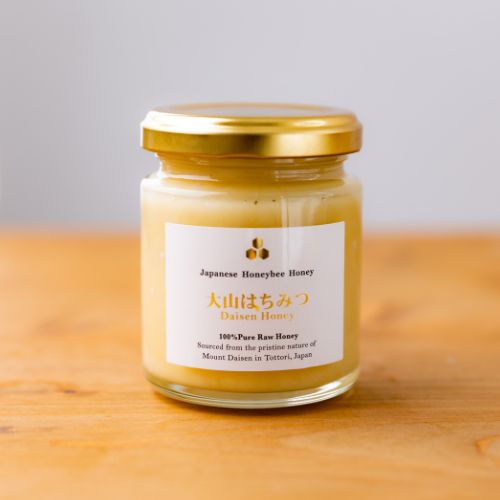
The Characteristics of Japanese Honeybee Honey | A Rare Honey Nurtured by the Nature of Mt. Daisen in Tottori

"I wonder what characteristics Japanese honeybee honey has." Many of you may have searched with that thought in mind. Both its flavor and the work behind it differ a little from the ordinary honey you see in supermarkets. In this article, we'll carefully introduce the characteristics of Japanese honeybee honey from the perspectives of taste, aroma, production method, and rarity. Please take your time to read on, along with the story of small-scale beekeeping that continues in Mt. Daisen, Tottori.
What Is Japanese Honeybee Honey?

Much of the honey widely distributed in Japan comes from Western honeybees (European honeybees). The Japanese honeybee, on the other hand, is a native species that has long lived in this country's fields and mountains. It is gentle by nature, and rather than concentrating on visiting only specific flowers, it gathers a little nectar from the many different flowers blooming nearby.
For this reason, Japanese honeybee honey is often called "hyakkamitsu" (multi-floral honey), and it rarely bears the name of a single flower. The nectar of trees and plants that bloom in each season blends together, and it is said that this gives rise to a flavor unique to that place and that year alone. The amount that can be harvested is also far smaller than with Western honeybees, which is why it has long been called "phantom honey."
Characteristics of Taste and Aroma

A major characteristic of Japanese honeybee honey is its complex flavor with great depth. It is said that as the nectar of multiple flowers matures over time within the hive, it develops a distinctive taste rich in body and depth.
When you take it into your mouth, a gentle sweetness spreads first, followed by a faint tartness and a mellow, floral aroma. Unlike light single-flower honey, many people feel a complexity in which the character seems to change with every bite. The color varies depending on the season it is harvested and the types of flowers, ranging from a pale golden hue to amber. This, too, can be seen as proof that it reflects nature just as it is. Simply adding a little to your bread, yogurt, or tea at your daily table should let you experience the difference.
A Flavor Nurtured by the Nature of Mt. Daisen

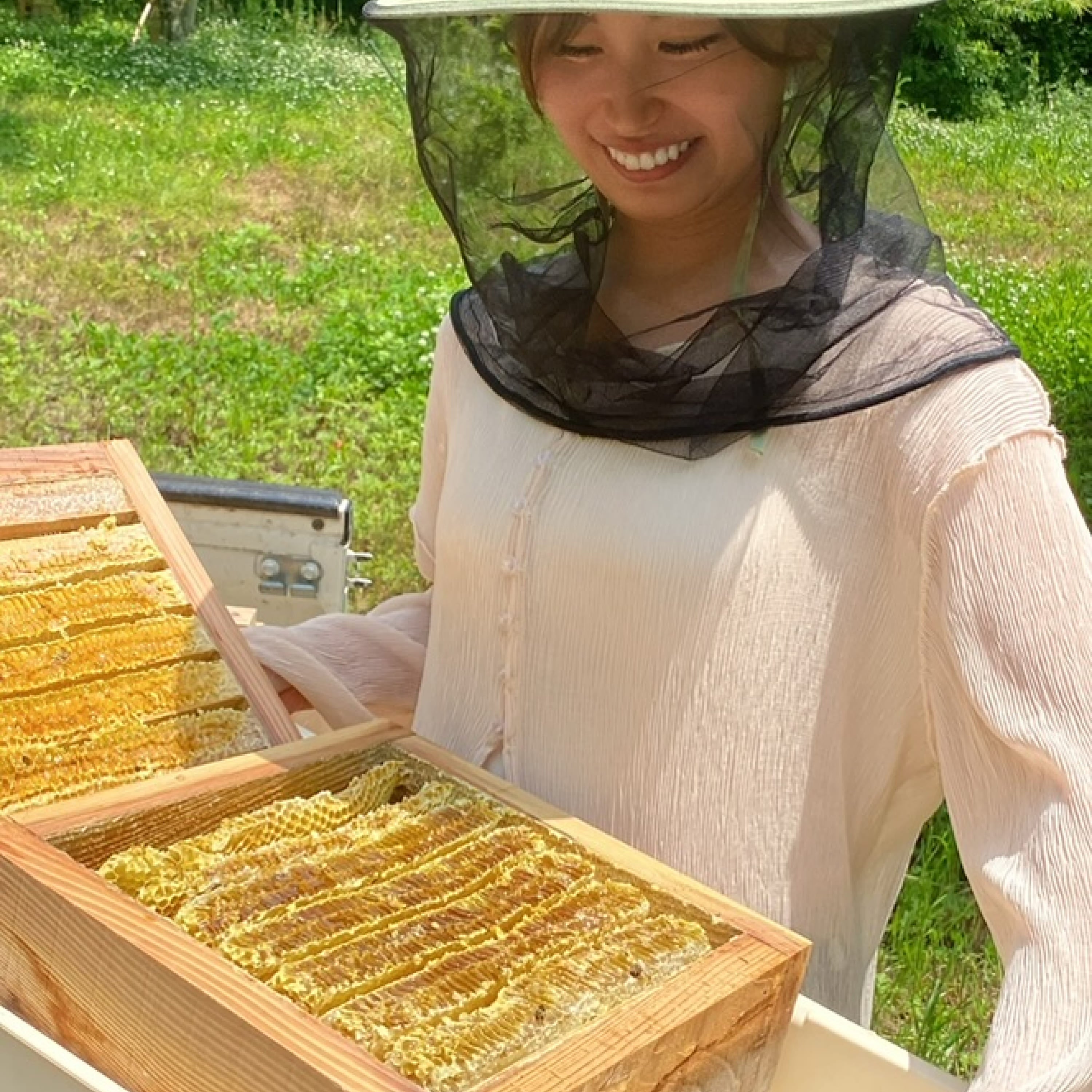
Our honey is harvested at the foot of Mt. Daisen in Tottori, known as a sacred mountain. This land, where primeval beech forests spread out and which is blessed with pure water and clear air, is a rich environment where diverse plants grow.
From spring into early summer, flowers bloom one after another on the mountain, and the honeybees carry these blessings back to their hive. The vegetation unique to the land of Mt. Daisen shapes a flavor that can be born nowhere else. Rather than adjusting the taste by human hands, the flavor changes little by little depending on the year's weather and how the flowers bloom—this is possible precisely because it is beekeeping that follows the rhythms of nature. The changing four seasons of Mt. Daisen quietly live on within a single jar of honey.
Our Commitment to a Non-Heated, Additive-Free Method

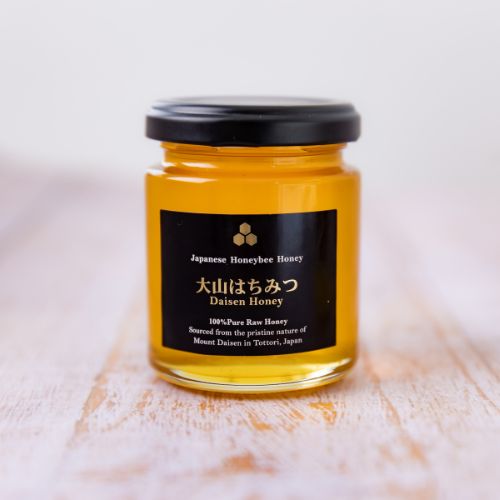
When talking about the characteristics of honey, the production method is also essential. Our honey is finished without heating and without additives. By not applying heat treatment and adding nothing extra, we cherish the aroma and flavor just as they are in nature.
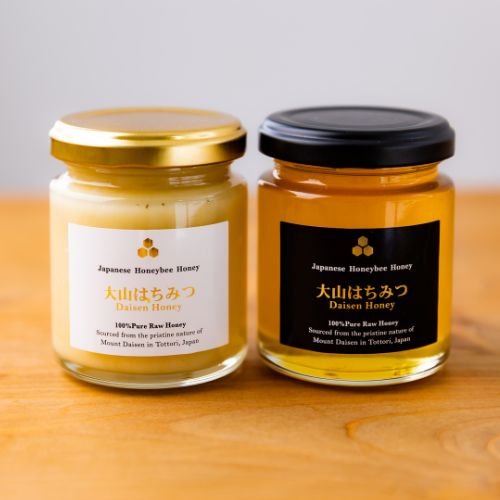
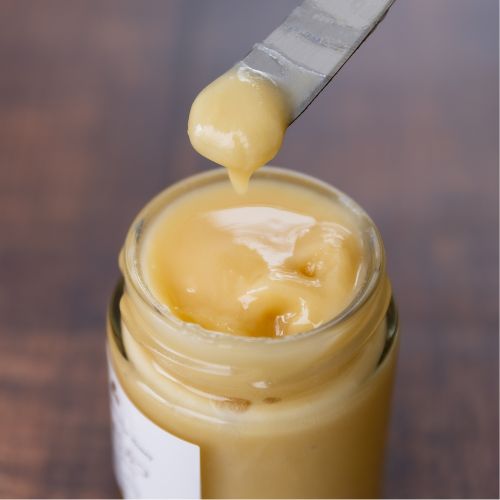
We carefully filter the harvested honey and bottle it with as little intervention as possible—a simple approach, but one meant to respect the work of the bees, who matured it over time. It may crystallize when the temperature drops, but this is considered one sign of natural honey. You can enjoy the taste of nature itself, free of any adulteration.
The Rarity of Just 200 Bottles Once a Year, and Respect for the Bees
Japanese honeybees yield only a small amount of honey, and our honey is delivered just once a year, limited to only 200 bottles. This is because we place importance on properly leaving behind the honey the bees need to survive the winter, rather than harvesting a great deal.
We share with everyone only the blessings we receive within reason. This is a form of sustainable beekeeping that allows us to continue for the long term, and it is also an expression of respect for nature and for the bees. We always want to remember that this single jar rests upon the earnest work of these small creatures. That is precisely why, although the quantity is not large, we deliver each one with all the more care.
Summary | Bringing the Blessings of Mt. Daisen to Your Table
Japanese honeybee honey is characterized by the complex, deep flavor unique to multi-floral honey, the natural deliciousness of being non-heated and additive-free, and the rarity of just 200 bottles once a year. Please do try, at your daily table, a jar born from the rich nature of Mt. Daisen and the quiet work of the bees. Before this year's harvest runs out, you can view the details on the product page below.


おすすめ商品